
Healthy Homes Insulation Requirements Explained
What are the Healthy Homes Standards?
The Healthy Homes Standards are the set of minimum requirements in New Zealand for rental properties. They aim to make homes warmer and drier by regulating things like insulation, heating, ventilation, moisture control, and draughts. Every private rental must comply by law.
What are the Requirements?
Under current regulations, landlords must ensure rental properties meet these key criteria:
Insulation – Ceiling and underfloor insulation must meet specified minimum R-values or thickness standards appropriate to your climate zone. Existing insulation may need to be topped up or replaced if it no longer performs effectively.
Heating – One or more fixed heaters must be capable of warming the main living room to at least 18°C.
Ventilation – Every habitable room needs an openable window or external door. Kitchens and bathrooms must have extractor fans to remove moisture.
Moisture ingress & drainage – Properties must have good drainage, working gutters and downpipes, and if there’s an enclosed subfloor, an appropriate ground moisture barrier.
Draught stopping – Landlords must seal gaps and holes that cause noticeable draughts around doors, windows, floors, and ceilings.
Every standard builds on earlier rental rules and reflects updated expectations as of the full compliance deadline.
Insulation Specifics Landlords Should Know
Ceiling insulation must have appropriate R-values for your climate zone or be at least a specified thickness (e.g., older ceilings may need at least 120mm if installed before older regulations).
Underfloor insulation must also meet a minimum R-value (for example, R1.3 is common) unless access or structure makes it impracticable.
Insulation must be in reasonable condition, with no significant gaps, damage, damp, or mould.
In areas of the house where insulation can’t reasonably be installed, exemptions may apply, but landlords must still take all reasonable steps.
What This Means for Landlords
Complying with the Healthy Homes Standards isn’t optional. Landlords must ensure properties meet all applicable standards and keep evidence of compliance. Here’s what that means in practice:
You must comply with insulation and all other standards under the Residential Tenancies Act 1986. Failure to do so may result in penalties, including fines.
When signing a new or renewed tenancy, landlords typically must include a statement that details the property’s current level of compliance with the Healthy Homes Standards.
You’re required to keep records showing how and when you complied. Tenants can request this information and landlords must provide it if asked.
Compliance is ongoing. If insulation breaks down, degrades, or becomes damaged, it should be repaired or replaced to maintain compliance.
What New Landlords Should Watch Out For
If you have just entered the rental market or taken on a new property, here are important points to consider:
Check existing insulation early. Don’t assume what’s there meets the current R-value or condition requirements. A professional inspection will clarify where upgrades are needed.
Know your climate zone. Minimum insulation requirements vary by region. The North Island and South Island zones have different R-value expectations.
Understand exemptions. Some parts of a home may be exempt if installation is unsafe or impracticable, but you must be able to justify and document those cases.
Plan upgrades with tenants in mind. Coordinating access and minimising disruption helps keep relationships positive while you bring the property up to standard.
Don’t overlook moisture barriers. If a home has an enclosed subfloor, a correctly installed ground moisture barrier is usually required and often missed by landlords and property managers alike.
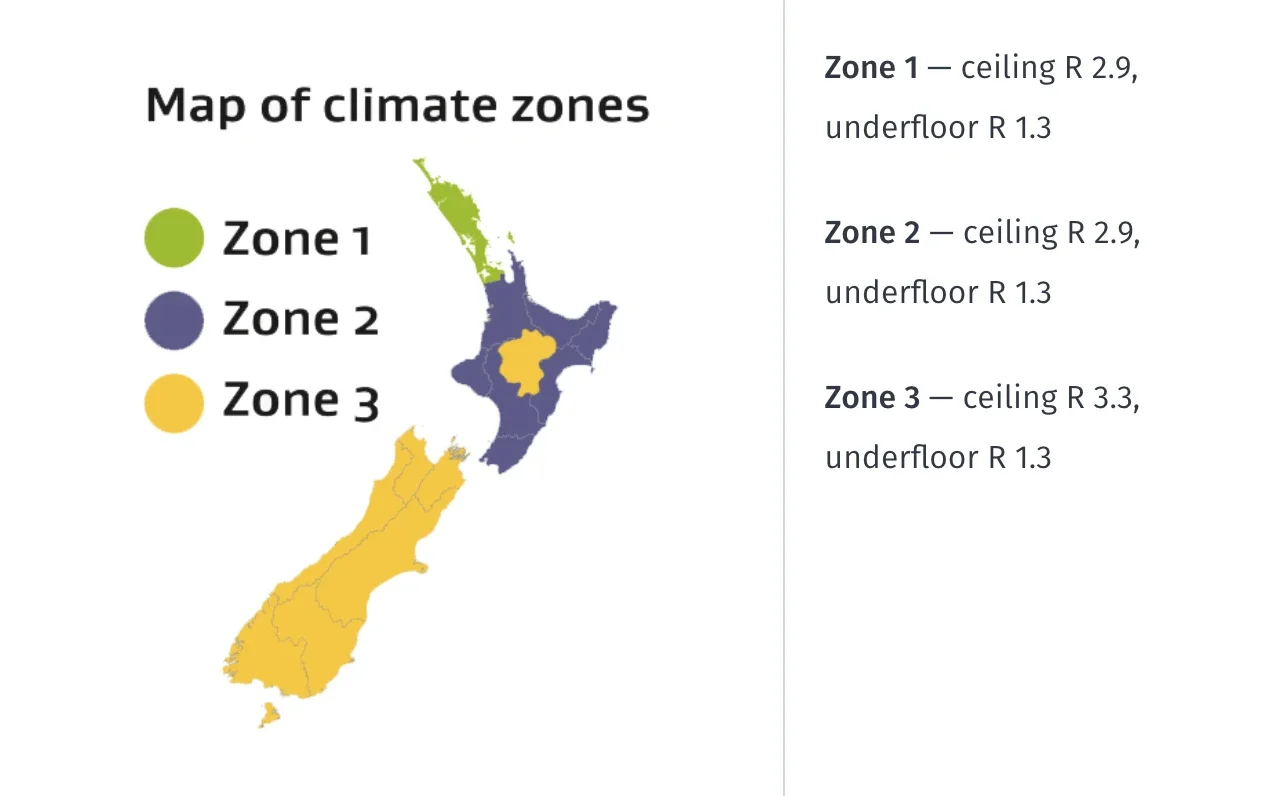
The minimum insulation requirements differ based on your region within New Zealand.
Why This Matters
Meeting the Healthy Homes Standards protects tenants, improves comfort and energy efficiency, reduces moisture and mould issues, and avoids legal or financial risk for landlords. Ensuring your property complies is not just a legal obligation, it’s good property management and investment care.